Diversifying income by growing affiliate revenue through a series of experiments.
- Which? Affiliates
-
- Product Design
- Growth
- 2022-23

Summary
Focus on diversifying revenue outside of subscriptions → Affiliates seemed logical as it was in our remit → We tested a few good ideas → These ideas translated to an estimated £100k additional revenue per year
- My role
- Leading design within a product trio
- OKR setting and stakeholder management
- Planning and facilitating workshops and ideation sessions
- Competitor and affiliate business research
- Planning and writing A/B test plans
- Collaborating with experimentation and data teams
- Ticket writing and being hand-ons with engineering
- Final UAT sign off before shipping
Problem
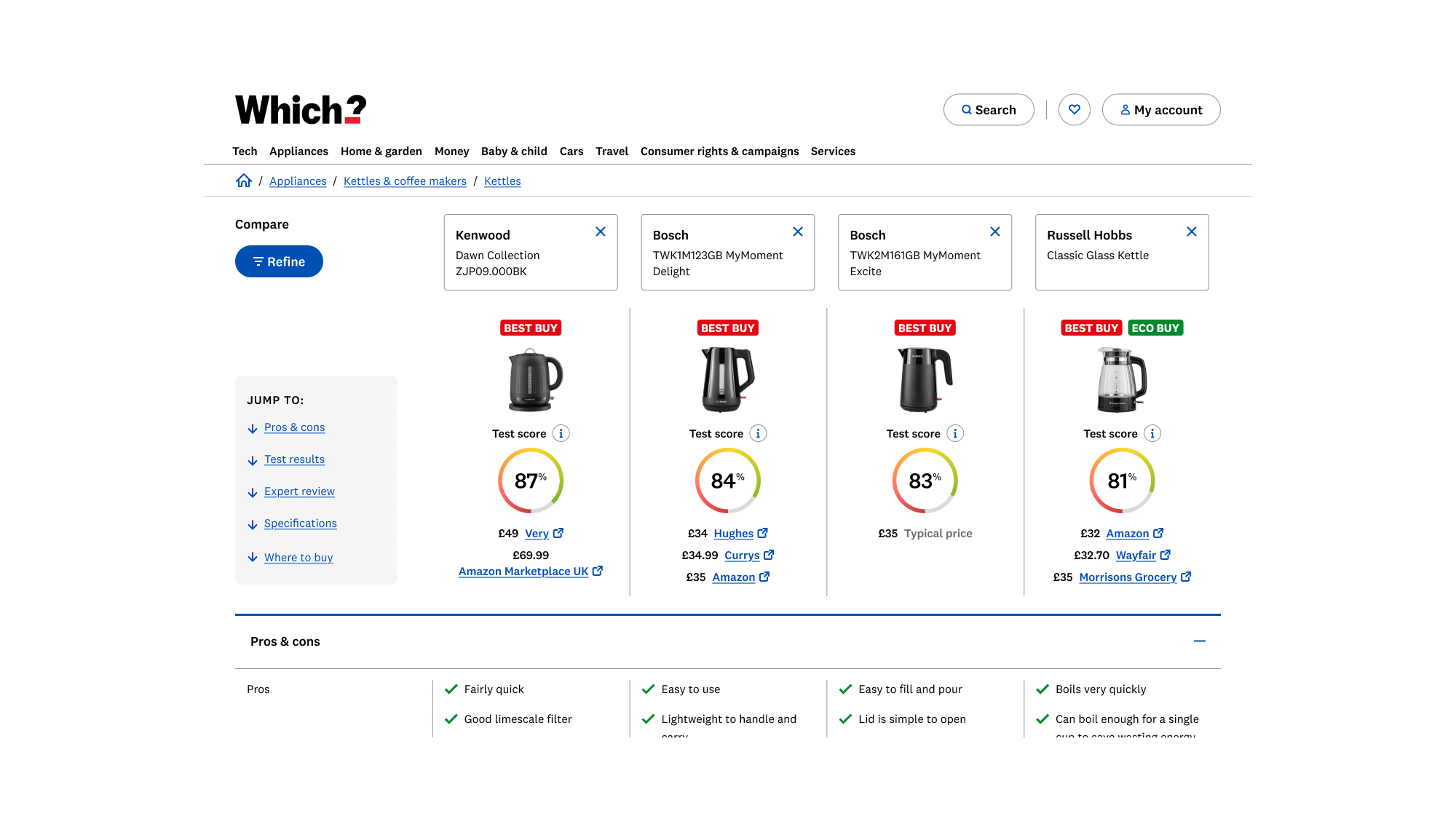
After migrating key product review pages (consisting of listing, product, and compare templates), we could finally look to improve these pages for our users. At the time, the problem within the business was that subscriptions were dwindling and we coudn't rely on them alone.
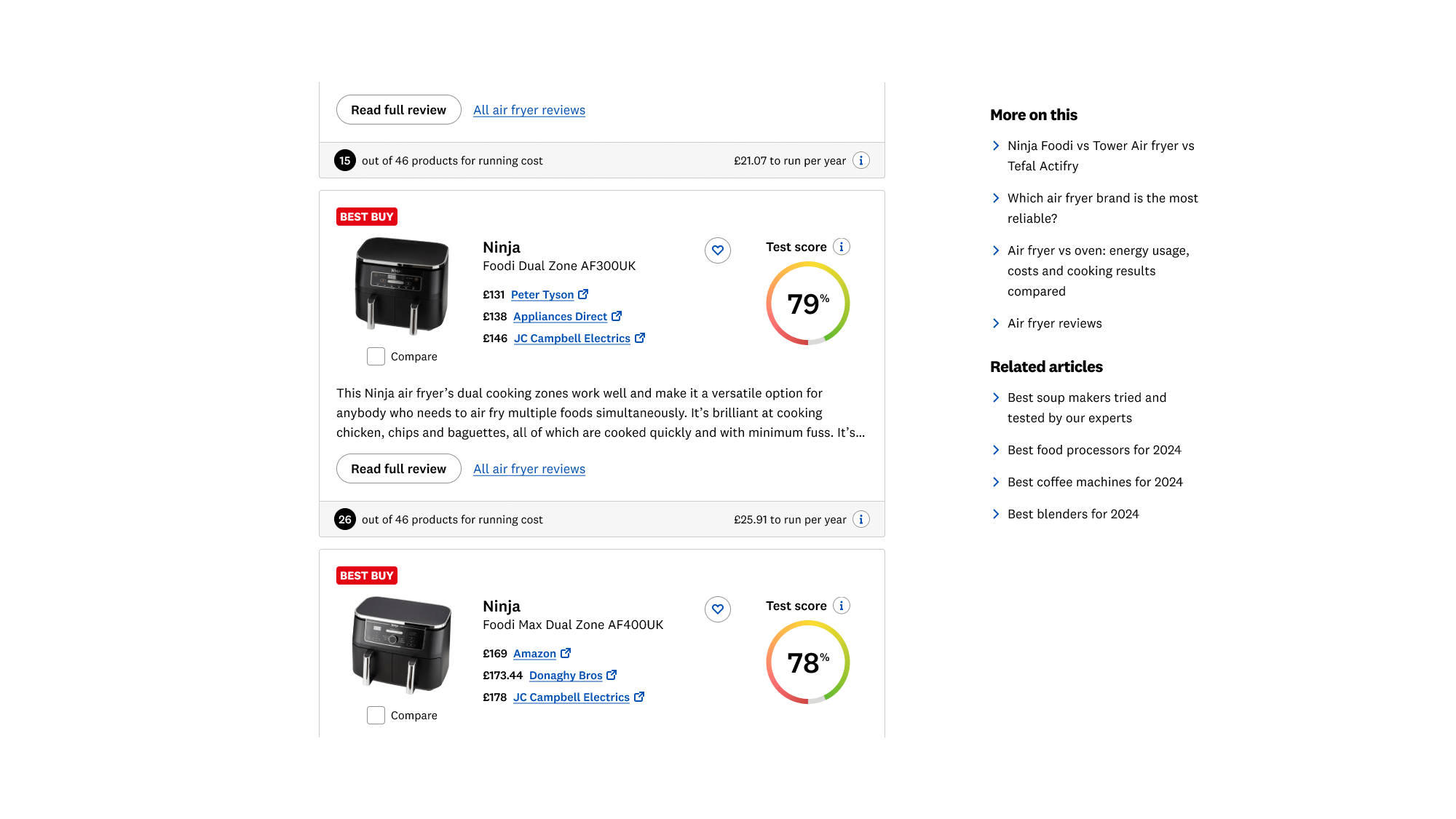
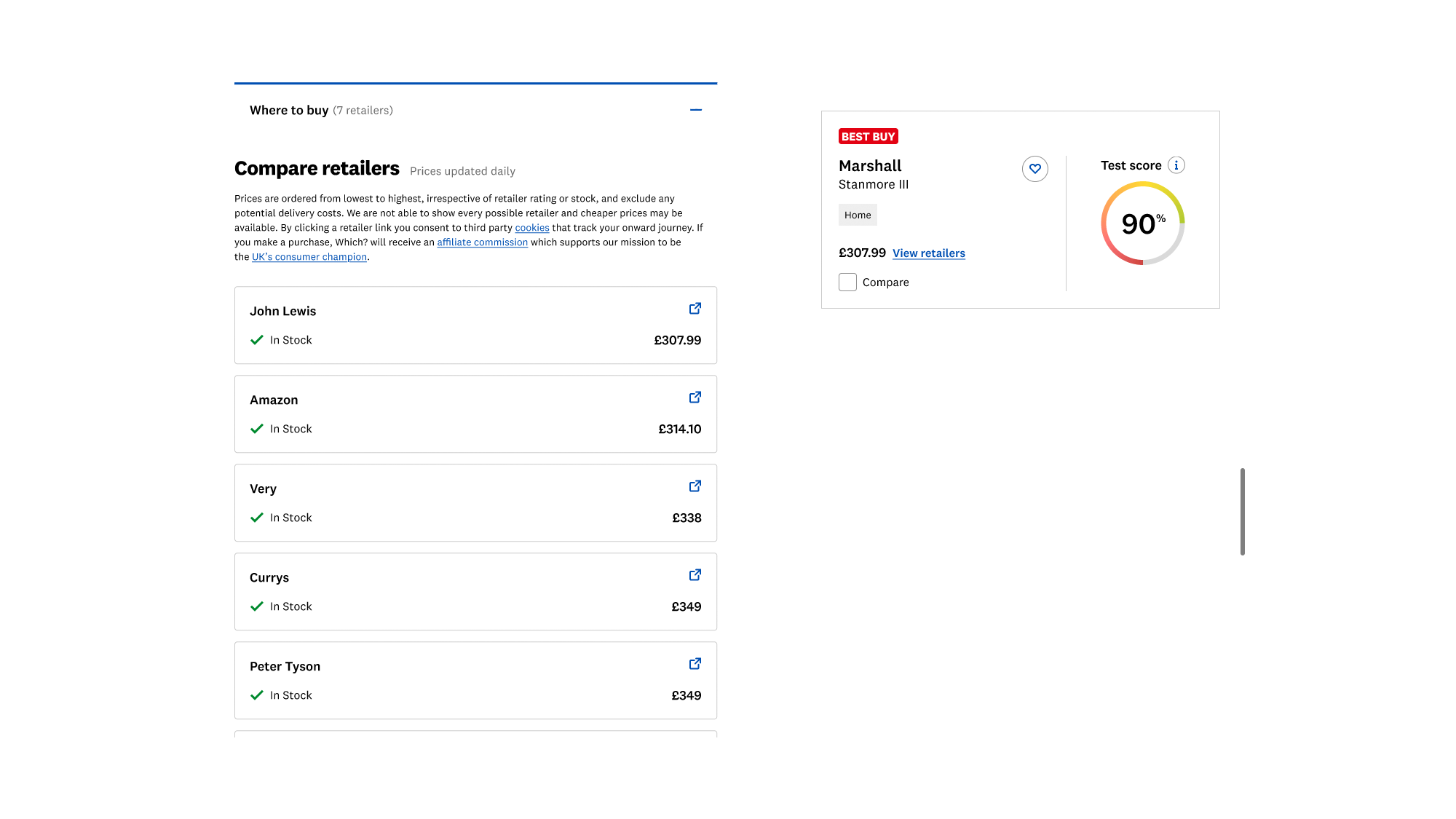
As a squad, we looked to focus on affiliates to diversify revenue for the business. We just migrated ‘where to buy’ components on these key pages but not much had changed which put us in a good position to explore opportunities to optimise the affiliate journey and how we presented retailer links to users.
Insights
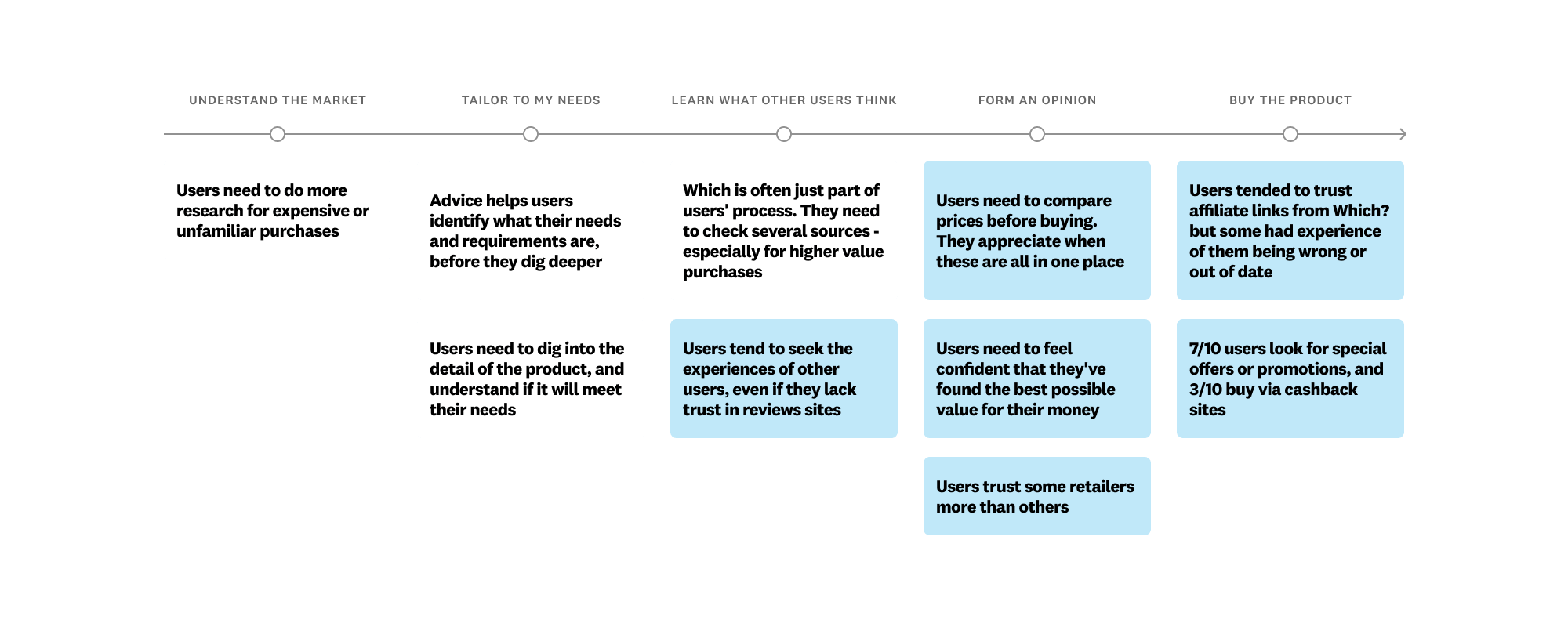
From the research and buying journey, we already knew that users need to feel confident that they've found the best price before purchasing a product.
A running theme from previous research was that when users are given the option of only 1 or 2 retailers, this isn't enough for them to use our affiliate links. It's normal behaviour for users to look elsewhere i.e. Google Shopping to find more available retailers and pricing. We couldn't force our users to click our affiliate links which made it very constraining in what we could do.
Opportunities
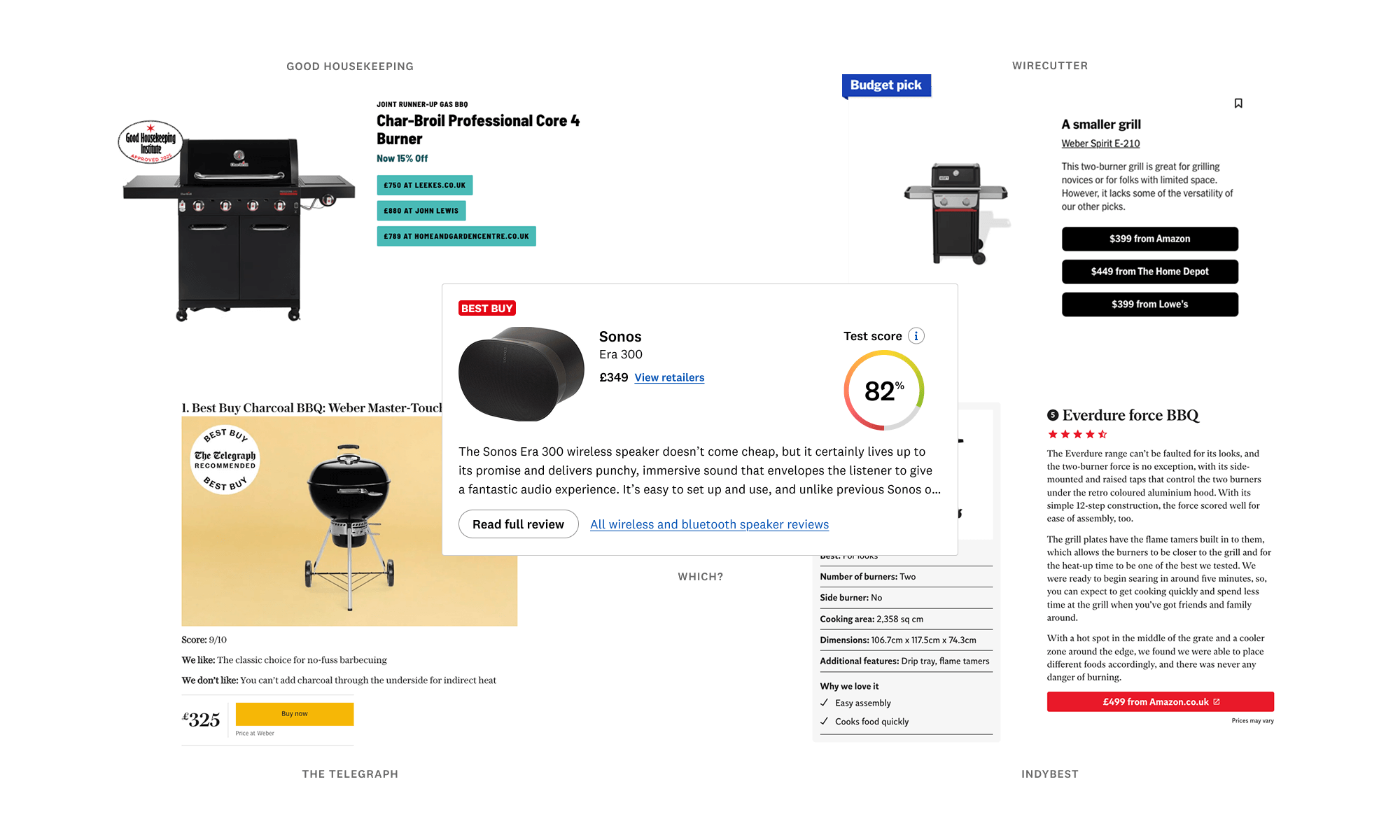
A workshop activity that was useful for us when it came to coming up with ideas to increase affiliate revenue was we tasked each squad member to find an example of how other publishers were doing affiliates well. This activity allowed them to get involved in competitor analysis as well as look for gaps in our existing affiliate experience.
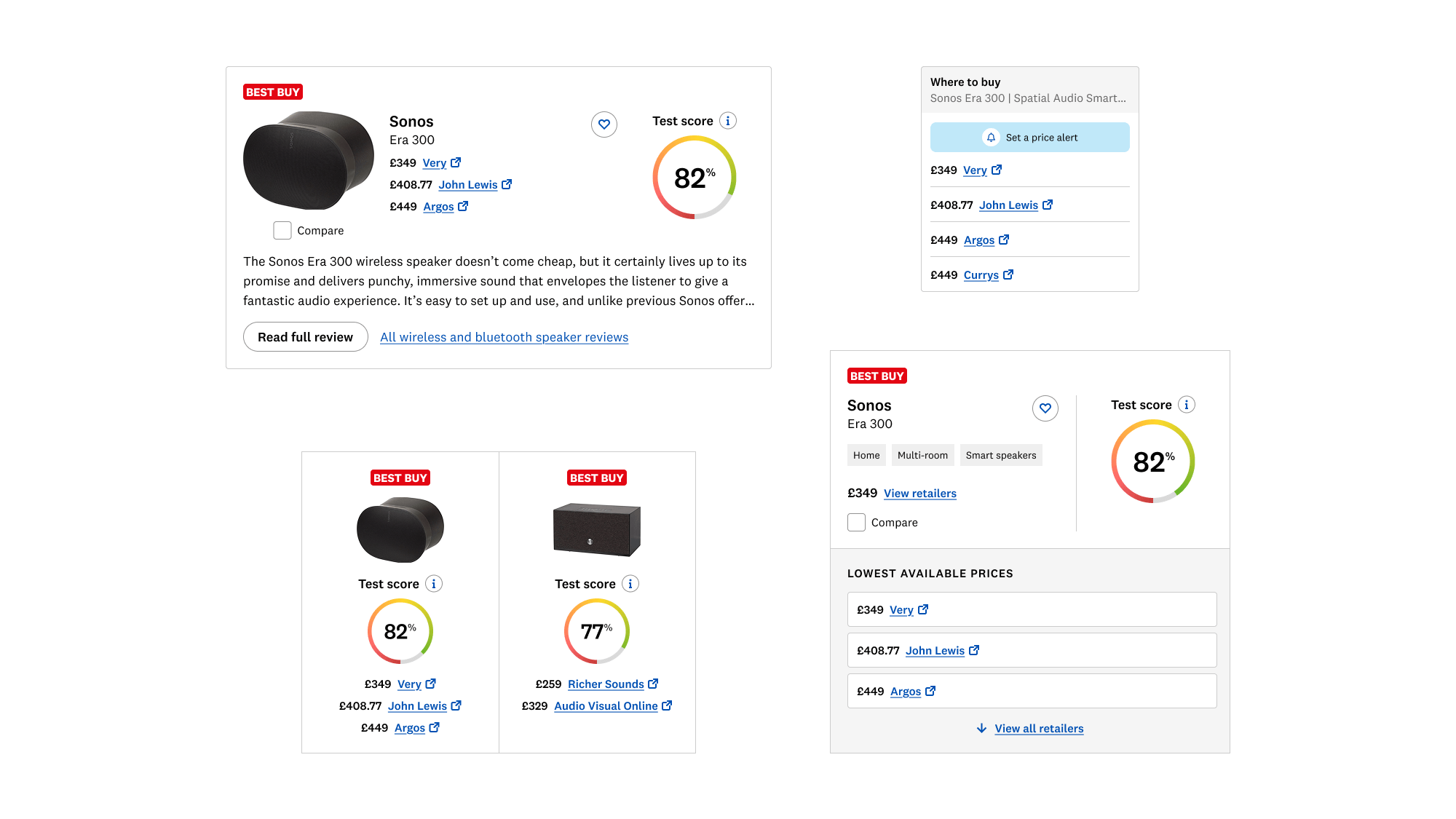
Examples of some of the ideas included removing steps in the affiliate journey to get users to retailers faster, adding more prominence to the links, and having the links visible within view on certain pages.
- Workshop agenda
- Warm-up: Competitor inspiration
- Context setting
- What we know: A/B tests and data points
- Pain points: JTBD / MMD
- How might we...
- Ideas, ideas, ideas
- Wrap up and next steps
Iterative approach
We relied on experimentation heavily in this project because it was important to show how each idea could impact affiliate revenue. Thankfully, we had some good ideas that resulted in big wins.
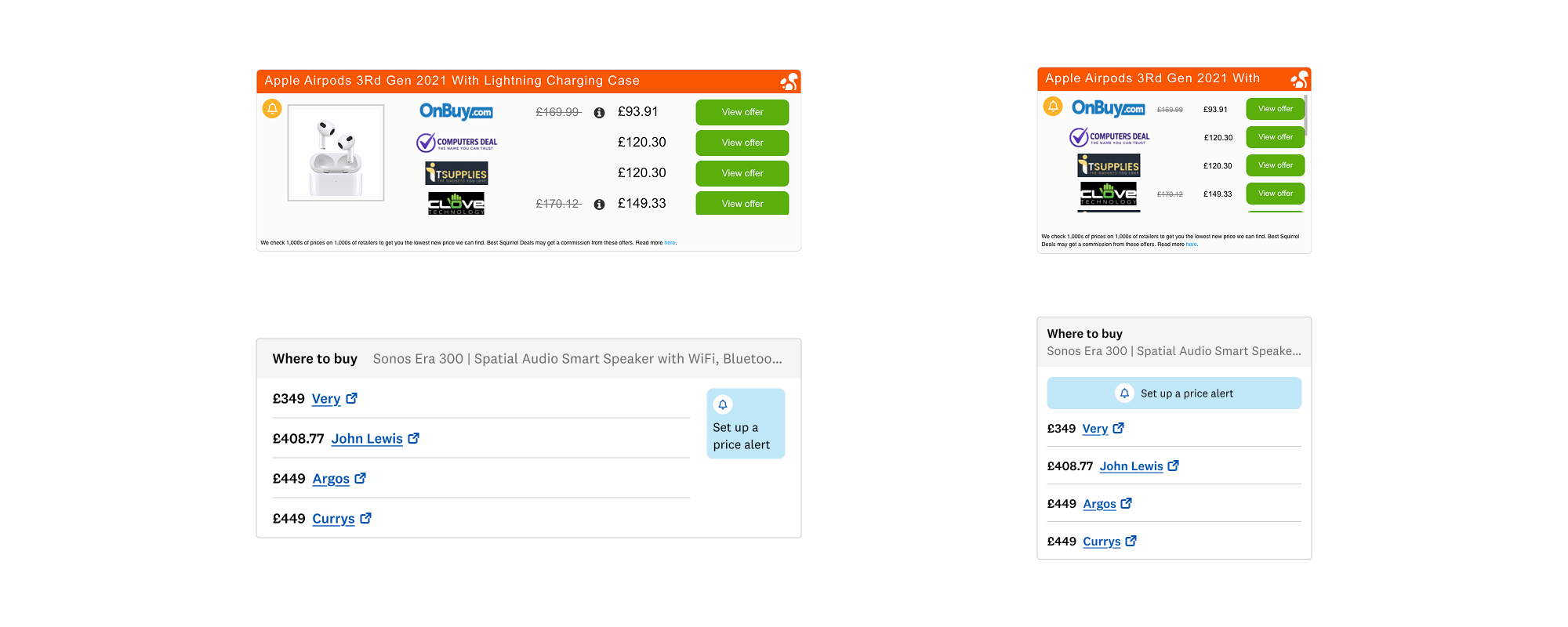
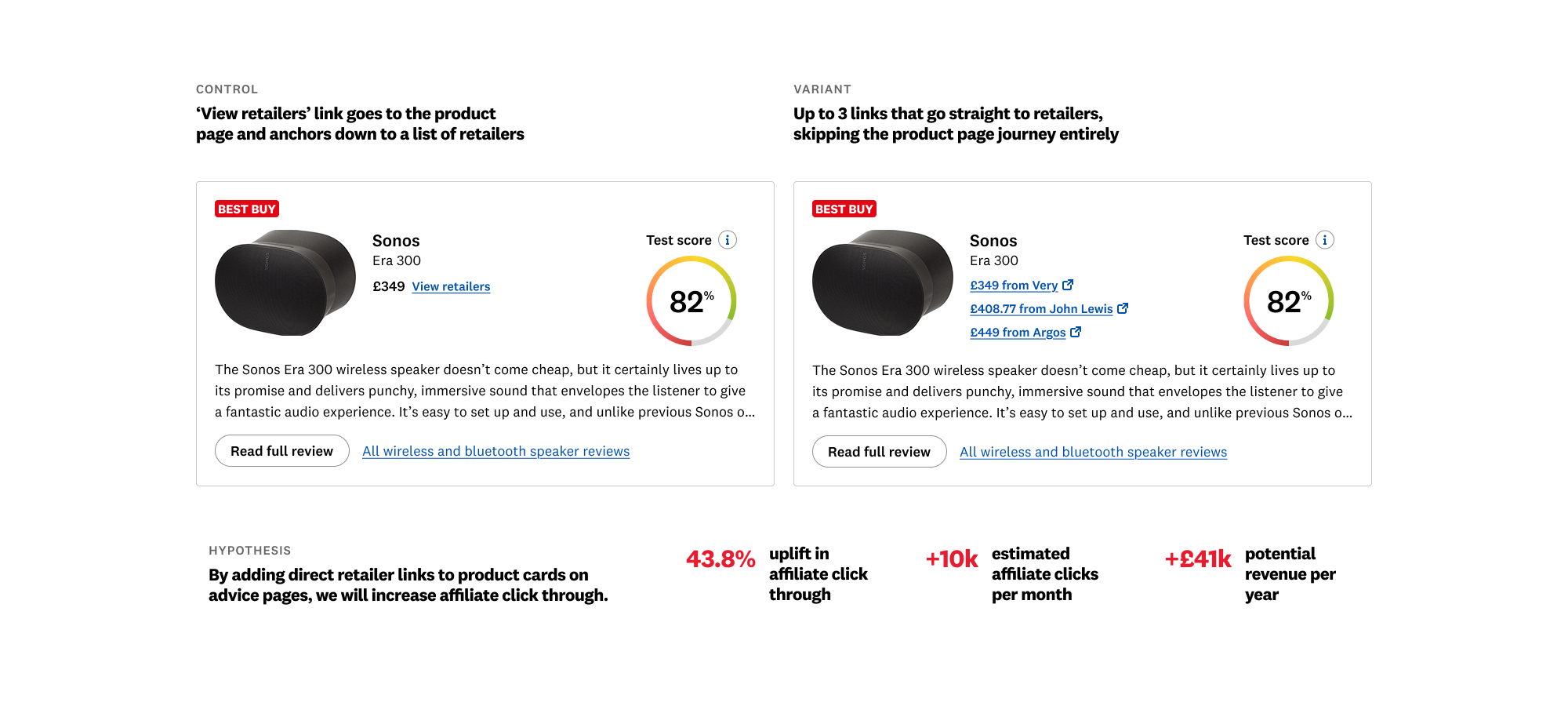
Our biggest affiliate test win came from a simple idea of adding links that go straight to the retailer on articles. It seems so simple because other publishers were already doing this.
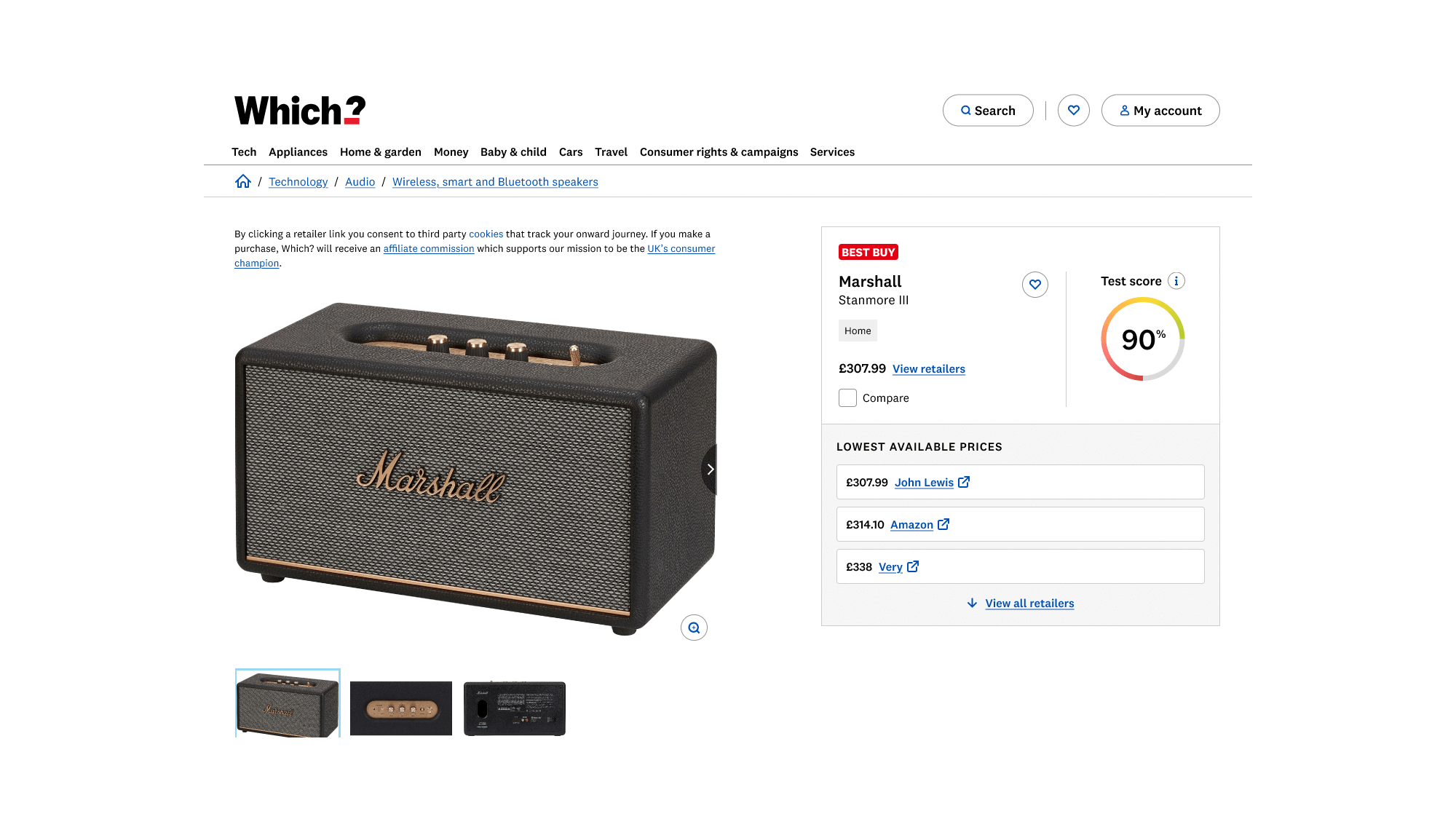
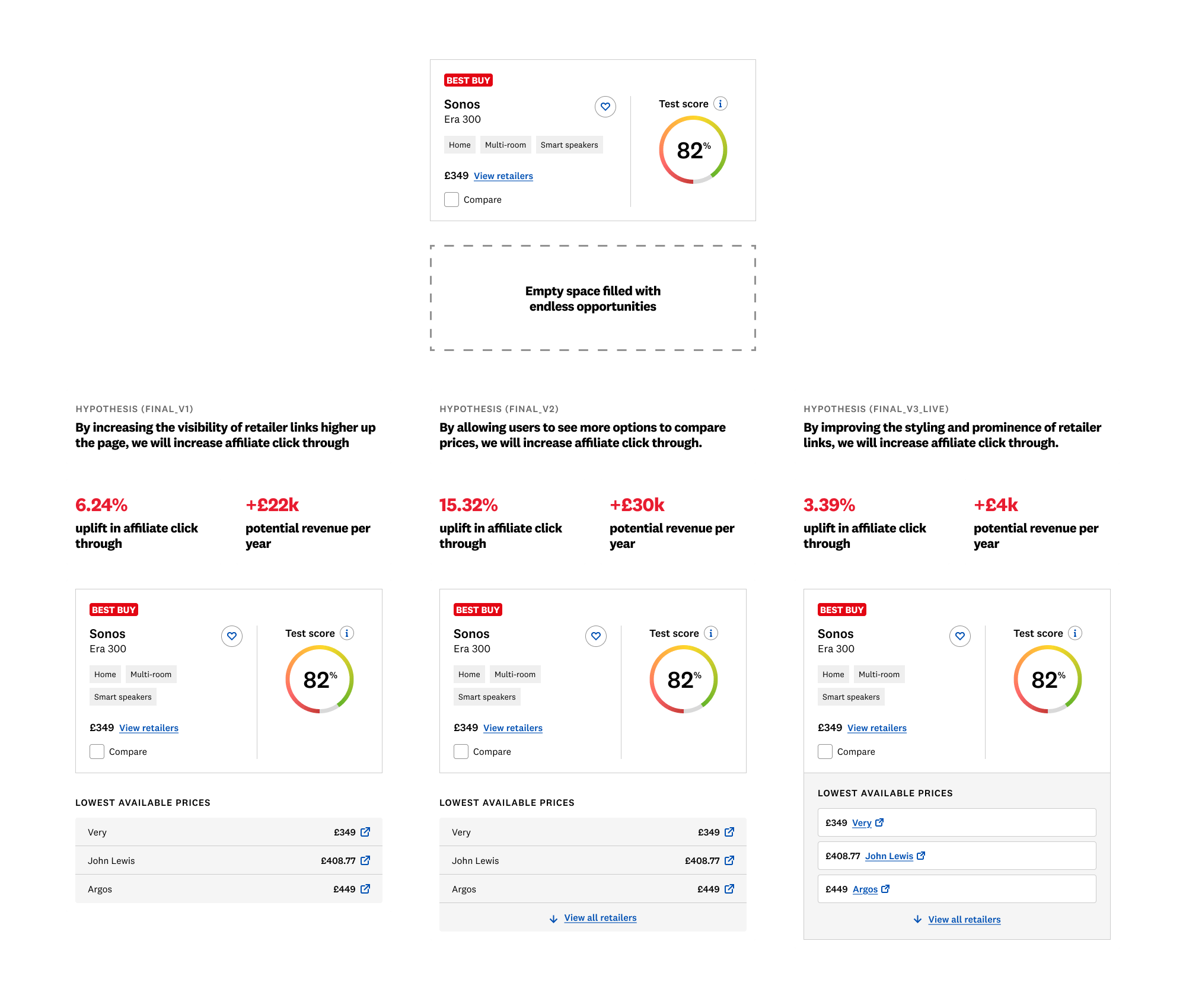
On product pages, we experimented by adding retailer links higher up the page. Previously, the links were near the bottom of the page in an accordion. Once we knew this worked and increased click through, we tested the component a couple more times. The final winner informed how the pricing and retailer link styles look today across all components.
Impact
It's hard to estimate how each test performed truly without real revenue figures because cost averages per affiliate click aren't accurate. Without knowing the actual numbers paid by retailers during these tests, it was difficult to know the true impact and attribute a winner from a test to an increase in revenue.
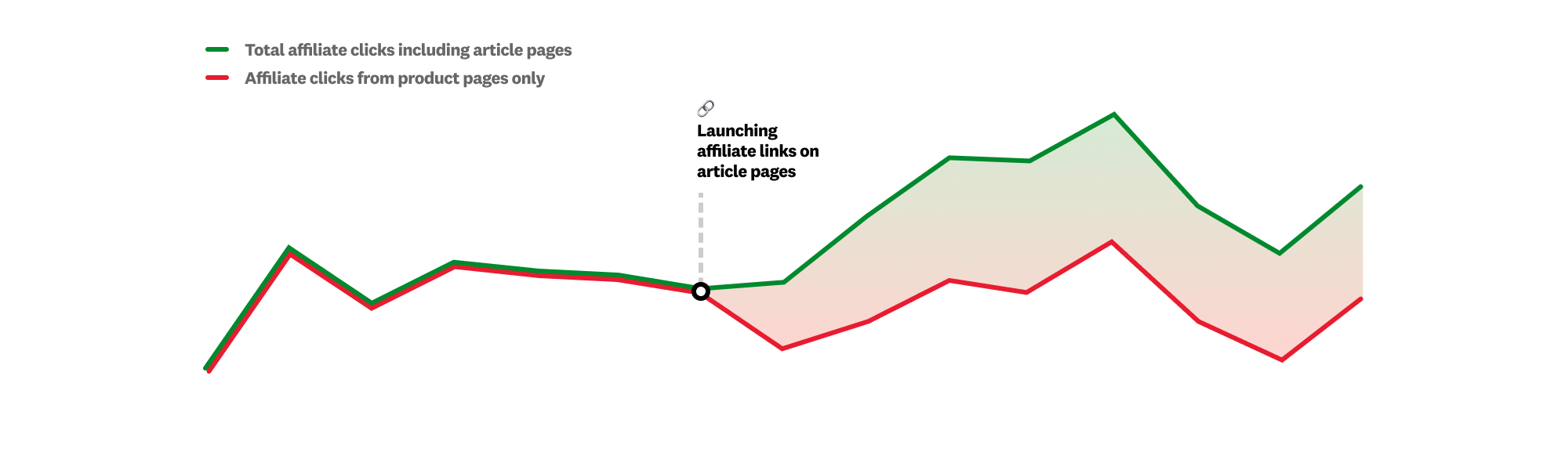
What we do know is that we had big wins and learnings from these tests. We worked on affiliates in back to back quarters and smashed both of our affiliate revenue targets where we did get real figures from the partnerships team. We also knew from GA data that where we re-distributed affiliate clicks onto articles, the total distribution of clicks across our components and pages weren't affected.
Reflections
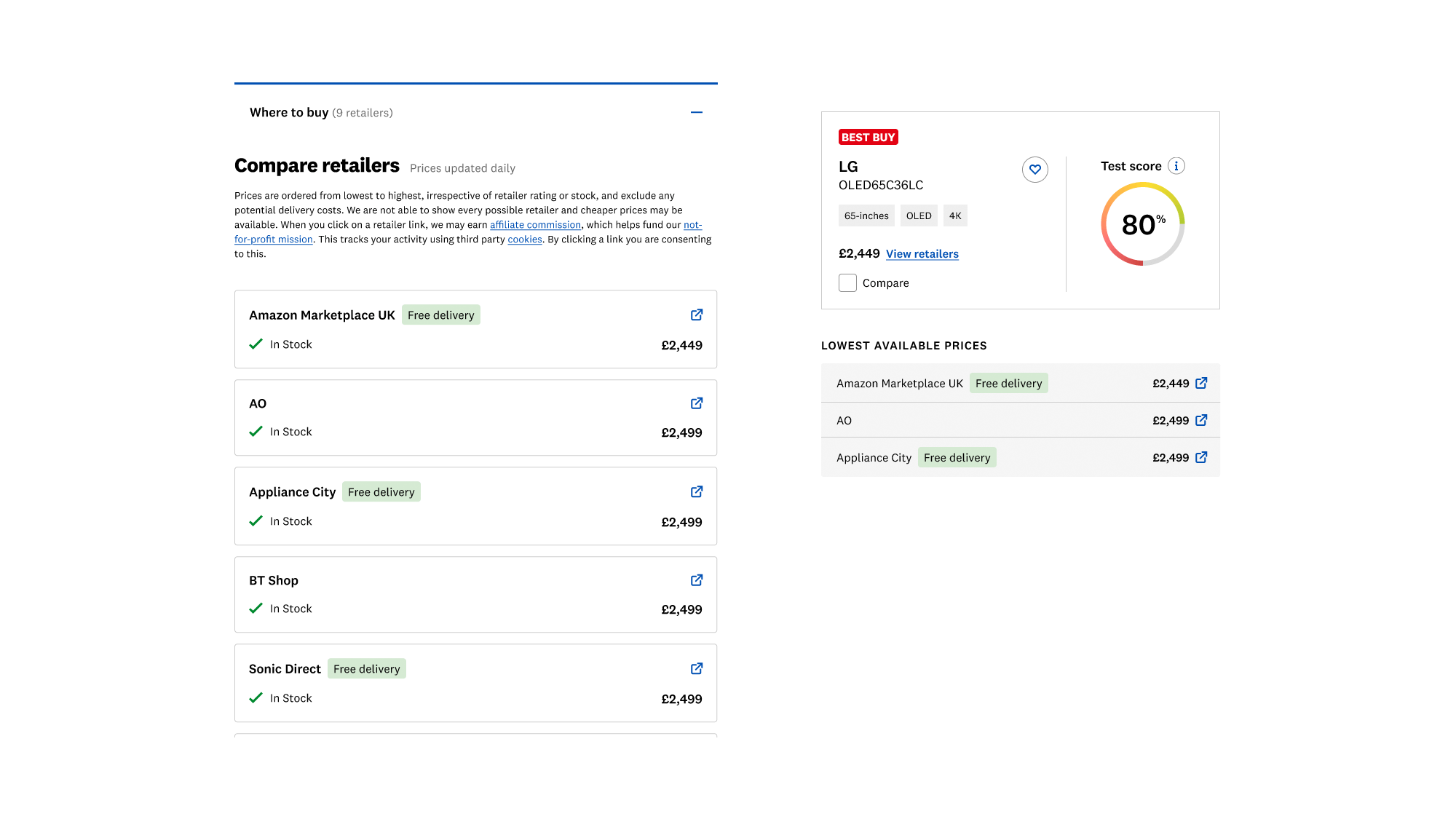
We had a lot of ideas and insights that we could use to improve the affiliate experience for our users. The reality of what we could do though was extremely limiting. For example, we carried out a fake door test that highlighted retailers who had free delivery and this increased affiliate clicks by 14%. This wasn't feasible because our third-party provider didn't have delivery information available. As of now, this data is still not available for us.
If you need to contribute to business metrics immediately, constraints are important to know because ideas need to scale right away to have impact. We've had issues before where we discovered an idea was too difficult to do because our content wasn't structured properly. Considering all things, we managed to test a bunch of ideas that were feasible and they contributed to the business instantly.
The end
As a thank you for scrolling this deep, here's a full list of all of the changes we released for affiliates. It was a mixture of A/B test wins and 'just do it' work that were no brainers because of sufficient past evidence.
- Everything we shipped
- Adding retailer links on article product cards
- Showing up to 3 retailers at the top of product pages
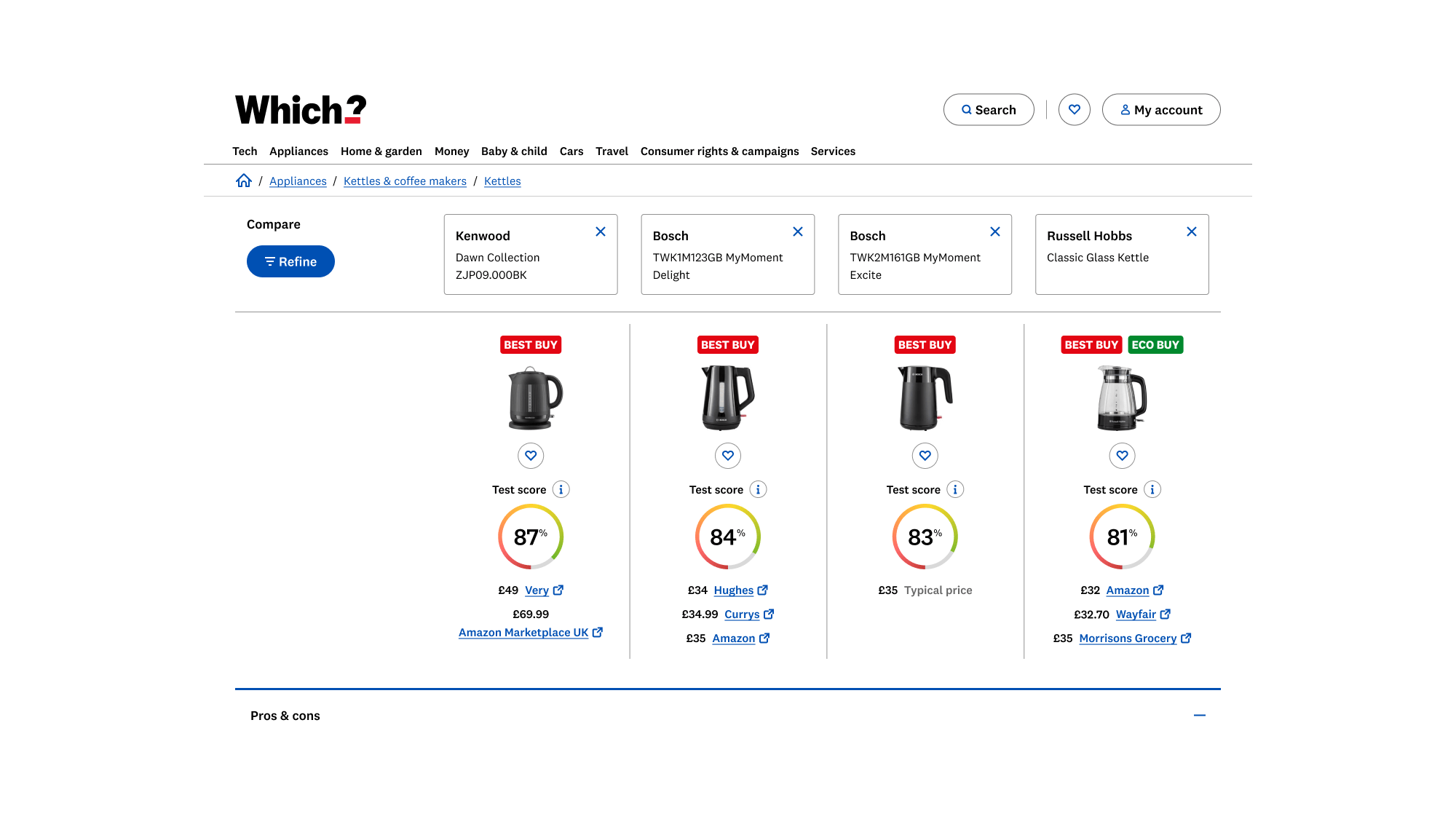
- More links on various parts of the compare page
- Customised styling on a widget used vastly on articles